
Macroeconomic data announcements, global factors and trading activity of foreign investors would be the key triggers for the domestic stock markets this week, analysts said. Last week, the benchmark indices joined the broader market's party despite a host of negative global cues. In the broader market, the BSE midcap and smallcap gauges hit their all-time highs on Friday.

So far this year, bankers have earned Rs 1,226 crore for handling 45 IPOs, which together mobilised Rs 48,363 crore.

Form 16 contains details of salary income, deductions, and exemptions.

Benchmark indices--Sensex and Nifty--were 0.7-0.8 per cent higher from the Saturday closing. Among the widely-tracked Nifty 50 stocks, 39 advanced and the rest 11 declined at the opening bell. Among the individual stocks, Cipla, ICICI Bank, Sun Pharma, Power Grid Corp, and Bharti Airtel were the top five gainers, while Asian Paints, Hindustan Unilever, Britania, HDFC Bank, and BPCL the losers, NSE data showed. On Monday, Indian stock exchanges were closed for trading on the occasion of Pran Pratistha of Ram Temple in Ayodhya.

The US Federal Reserve's interest rate decision, global cues, macroeconomic data announcements and the ongoing quarterly earnings are the major triggers that will dictate trends in stock markets this week, analysts said. Besides, the trading activity of foreign investors and the movement of global oil benchmark Brent crude will also be tracked. "All eyes are on the outcome of the US Federal Reserve meeting scheduled for November 1, particularly due to the multi-year high levels of the US bond yields.

The revamped Special Economic Zone (SEZ) law is unlikely to see the light of the day before the upcoming Lok Sabha elections, two people aware of the matter said. The commerce department had sought the Union Cabinet's nod to bring amendments to the existing SEZ Act, 2005 late last year. The plan, thereafter, was to introduce the Bill in the winter session of Parliament. Cabinet's approval remains pending.
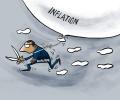
Most members of the Reserve Bank of India's monetary policy committee (MPC) decided to stick to the course on bringing retail inflation to the target of 4 per cent while voting for maintaining status quo in the April review, except external member Jayanth Varma who voted for a 25 bps cut in the repo rate. "I believe that the extant monetary policy setting is well positioned," RBI governor Shaktikanta Das said in the minutes of the policy review, which came out on Friday. "Monetary policy transmission is continuing and inflation expectations of households are also getting further anchored.

Equity benchmarks staged a comeback during the fag-end of trade on Wednesday, with the Sensex climbing over 214 points amid continuous foreign fund inflows and a largely positive trend in global markets. Buying in IT counters and Reliance Industries added to the momentum. In a volatile session, the 30-share BSE benchmark ended 214.17 points or 0.37 per cent higher at 58,350.53.

'Banks may find small ticket size lending economically unviable due to the cost of branch operations.'

'Consider 40% to 50% in equities, 10% in gold as a hedge, and the remaining 30% to 40% split between multi-asset funds and hybrid funds.'

In a relief to homebuyers, assets in a real estate project that have been handed over to the allottee would be kept out of the liquidation process of the company, the latest amendment to the rules by the Insolvency and Bankruptcy Board of India (IBBI) has said. The notification dated February 12 said: "For the purposes of clause (e) of sub-section (4) of section 36, wherever the corporate debtor has given possession to an allottee in a real estate project, such asset shall not form a part of the liquidation estate of the corporate debtor." Real estate experts call it a "pragmatic approach" by the regulator. "However, there are many cases where possession has not been given because the property is stuck in insolvency.

India's share of total global venture capital (VC) funding fell to 2.9 per cent in calendar year 2023 (CY23) - the lowest since CY19 - reaching $7.3 billion as most startups struggled to raise money without compromising on their earlier valuations. Based on global data by CB Insights on VC funding, funding to Indian startups fell by nearly a third compared to CY22 when it hit $20.6 billion and accounted for 4.8 per cent of the global figure. While the data shows that the world had 71 new unicorns (21 in Asia), India contributed only two of them, as compared with CY22 when it had 22.
Domestic equity markets will be driven mainly by quarterly earnings, global trends, and the movement in crude oil prices in this holiday-shortened week, analysts said. Investors would also keep an eye on the Middle East amid the ongoing Hamas-Israel conflict and the trading activity of foreign investors. Markets will remain closed on Tuesday for Dussehra.

Among major Sensex movers, ITC rose the most by 1.70 per cent, Wipro by 1.43 per cent, Tech Mahindra by 1.36 per cent and Nestle India by 1.27 per cent. Other gainers included HCL Tech, Asian Paints and Reliance. On the other hand, ICICI Bank, NTPC, UltraTech Cement and Tata Steel traded with a loss of up to 0.82 per cent.

The government on Friday extended by six months till March 2022 the deadline to link PAN with biometric ID Aadhaar. In a statement, the Central Board of Direct Taxes (CBDT) said to address the hardship being faced by various stakeholders on account of the COVID-19 pandemic, the timeline has been extended which will ease compliance.

The central government's fiscal deficit touched 67.8 per cent of the full-year target at the end of January due to higher expenses and lower revenue realisations, according to official data released on Tuesday. In actual terms, the fiscal deficit or gap between the expenditure and revenue collection during April-January period stood at Rs 11.9 lakh crore, as per the data from the Controller General of Accounts (CGA). The fiscal deficit in the comparable period of 2021-22 was 58.9 per cent of that year's Revised Estimate (RE) in the Budget.

Equity mutual funds (MFs) deployed maximum in shares of Reliance Industries (RIL) in June at Rs 2,177 crore, followed by Maruti Suzuki (Rs 2,045 crore) and Bharti Airtel (Rs 1,310 crore). Shares of both RIL and Bharti Airtel have been turbulent this month. On July 1, shares of RIL crashed over 7 per cent, following the government imposing windfall taxes on domestic crude oil production and fuel exports.

RBI Governor Shaktikanta Das on Thursday said the central bank does not "emulate" others when it comes to regulations and asserted that the bank's as well as his own opposition to cryptocurrencies remain unchanged, a day after US regulators allowed bitcoin Exchange Traded Funds (ETFs). He also said that emerging markets and the world cannot afford to have a "crypto mania". "What is good for another market need not be good for us.

The government has raised the penalty amount to up to Rs 500 crore for violating the provisions proposed under the draft Digital Personal Data Protection Bill 2022 issued on Friday. The draft personal data protection bill in 2019 proposed a penalty of Rs 15 crore or 4 per cent of the global turnover of an entity. The draft proposes to set up a Data Protection Board of India, which will carry on functions as per the provisions of the bill.

The ongoing second quarter earnings, movement of oil benchmark Brent crude and the uncertainty in the Middle East would dictate terms in the domestic markets this week, analysts said. Furthermore, the activities of Foreign Institutional Investors (FIIs) will also influence trading in the markets. "A slew of earnings reports from heavyweights expected this week will significantly impact market direction.

In addition to interest rates, review the fine print for penalties and repayment terms, and select a reputable lender to avoid harsh recovery practices.

The Union finance ministry has rejected a proposal sent by the labour ministry to double the monthly minimum pension amount to Rs 2,000 under the Employee Pension Scheme (EPS). The Central Board of Trustees (CBT), the apex decision-making body of the Employee Provident Fund Organisation (EPFO), was apprised of the proposal's rejection during a meeting on Saturday. "According to the recommendations made by a highly-empowered monitoring committee constituted by the government, a proposal to increase the minimum pension under EPS from Rs 1,000 to Rs 2,000 per month, by providing additional budgetary support, was sent to the ministry of finance.

'PPF carries minimal risk.' 'Its fixed-income nature allows investors to diversify their portfolios.'

Mobile wallet adoption is surging in India and swiftly becoming a primary payment option, surpassing traditional methods like cash and cards. Over the next few years, payments via mobile wallets in India are likely to surpass the Rs 531.8 trillion mark in 2028, witnessing a compound annual growth rate (CAGR) of 18.3 per cent between 2024 and 2028, according to GlobalData - a London-based leading data and analytics company. The value of mobile wallet payments in India, as per a GlobalData report, grew at a CAGR of 72.1 per cent between 2019 and 2023 to reach Rs 202.8 trillion ($2.5 trillion) in 2023.

In the backdrop of the crisis brewing at Paytm Payments Bank, major fintech companies are ramping up their workforce and inducting new faces in their leadership teams, industry sources said on Wednesday. Users will not be able to add funds to their Paytm Payments Bank Wallet after February 29, though they will still be able to use the services and the existing balance in the wallets, according to the Reserve Bank of India (RBI) diktat. Industry sources said that competitors to Paytm are investing heavily in offline payments while doubling their salesforce.
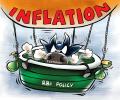
The Reserve Bank of India on Thursday marginally lowered its inflation projection for the current financial year to 5.1 per cent, as Governor Shaktikanta Das said the central bank's monetary policy actions are yielding the desired results. In April, the Reserve Bank had estimated the consumer price index (CPI) based retail inflation at 5.2 per cent during the fiscal 2023-24. CPI inflation fell sharply to 4.7 per cent in April 2023, from 6.4 per cent in February, on the back of favourable base effects, with softening observed across all the three major groups.

Reserve Bank of India on Friday said it has imposed a penalty of Rs 93 lakh on Axis Bank for various violations, including those related to KYC guidelines. The central bank has also slapped a fine of Rs 90 lakh on IDBI Bank. A monetary penalty of Rs 93 lakh has been imposed on Axis Bank for non-compliance of certain directions issued by RBI, the regulator said in a release.
RBI's interest rate decision, macroeconomic data, global trends and trading activity of foreign investors are the crucial factors to drive equity markets in a holiday-shortened week ahead, analysts said. Markets would remain closed on Monday for Gandhi Jayanti. "While global cues will continue to dictate trends in local markets, focus will shift to RBI's monetary policy announcement on Friday. "Although the market is expecting a status quo on interest rates, global concerns like rising US dollar index and bond yields coupled with surging crude oil prices continue to weigh on investors' minds.

Foreign portfolio investors (FPI) have pulled out $3.5 billion from India's equity markets so far this month. The selling comes on the back of election-induced volatility and the rotation of flows from India to China, where stocks are available at half the valuations. If the selling pressure remains at the current level, this will be the highest FPI pullout since January 2023.

Wealthy Indians are adding new residential addresses to their assets, many of them in Dubai. The quality of life in the desert city is comparable to any coveted city in the world. Its property market is regulated to protect investors' interests.

The fallout from the Justice K Hema Committee report on harassment and abuse in the Malayalam film industry intensified on Monday as a case was filed against well-known filmmaker Ranjith, and several female actors stepped forward with disturbing accounts of the mistreatment they faced at the hands of their various male counterparts.
Boom, bust or a bit of both: as the jury bides time before ruling on the US 'recession', the economy's vital signs at a perplexing time of high-interest rates, still-punishing inflation, and surprisingly strong economic gains are a study of a growing debate over whether the world's largest economy is barrelling into a new downturn. With the US Federal Reserve's (Fed's) inflation fighters attempting the risky pursuit of 'pillow-soft landings' and its economy sending out mixed signals, if there is indeed a recession, it could spell trouble for domestic equities and corporate earnings growth.

The Reserve Bank on Wednesday allowed credit cards to be linked with the unified payments interface (UPI), which will enable more people to make payments using the popular platform. At present, UPI facilitates transactions by linking savings or current accounts through users' debit cards. "...it is proposed to allow linking of credit cards to UPI," RBI Governor Shaktikanta Das said while announcing the regulatory moves, along with the bi-monthly policy review.
Aadhaar holders who were issued the unique ID more than 10 years back but have not updated their details since then are being urged to update identification and residence proof documents, UIDAI said. In a statement, UIDAI -- the government agency that issues Aadhaar numbers -- said the updation can be done online as well as at Aadhaar centres. It said those who were issued the unique identification number more than 10 years back and have not done any updation since the issue are being "requested" to update their documents.

The annual decline works out to be 16.3 per cent in 2022-23 compared to inflows in 2021-22. The gross FDI inflows in 2021-22 were $81.97 billion, up 10 per cent over fiscal 2019-20. The previous year-on-year contraction in FDI was in 2012-13 when the inflows declined by 26 per cent to $34.298 billion.

Retail inflation eased to an 11-month low of 4.83 per cent in April as prices of some kitchen items declined though overall food basket firmed up marginally, according to a government data released on Monday. The Consumer Price Index (CPI)-based retail inflation was 4.85 per cent in March. It was 4.7 per cent in April 2023.

Market regulator Sebi does not expect a large number of foreign portfolio investors to be impacted by the new beneficial ownership disclosure norms, according to sources. The norms are set to come into effect from February 1 and against this backdrop, the equity market has witnessed significant volatility, with the benchmark Sensex crashing over 1,000 points on Tuesday after shedding early intraday gains. The sources in the know said FPIs which may be required to provide enhanced disclosures are expected to be significantly less than estimated in the consultation paper and the Sebi board note of October 2023.

Does the food jargon found in cookbooks or on restaurant menus defeat you? Well, brush it up then...

India's outward Foreign Direct Investment (FDI) nosedived to $11.12 billion in January-June (H1 2023) from $23.57 billion in the same period last year, indicative of the slowdown in the global economy, according to the Reserve Bank of India (RBI) data. The outward FDI expressed as the total financial commitment, has three components, namely equity, loan and guarantees. The sharp contraction in the commitments (outward FDI) was prominent in the April-June 2023 period.
The US Federal Reserve's interest rate decision, global market trends and trading activity of foreign investors are the major factors that would dictate terms in the equity markets in a holiday-shortened week ahead, analysts said. Equity markets will remain closed on Tuesday on account of Ganesh Chaturthi. From the global front, interest rate decisions from the Bank of England and Bank of Japan would also influence market trends.
